1️⃣ Суть производства выдувных пленок
Выдувание пленки - это непрерывный процесс экструзии который превращает расплавы полимеров в тонкостенные трубчатые пленки со следующими целями:
-
Равномерная толщина
-
Стабильные механические свойства
-
Подходит для упаковки и промышленного применения
Такие распространенные проблемы, как нестабильная толщина пленки, частые разрывы и отходы материала, часто возникают из-за недостаточное понимание фундаментальных принципов, Это приводит к снижению производительности и увеличению расходов.
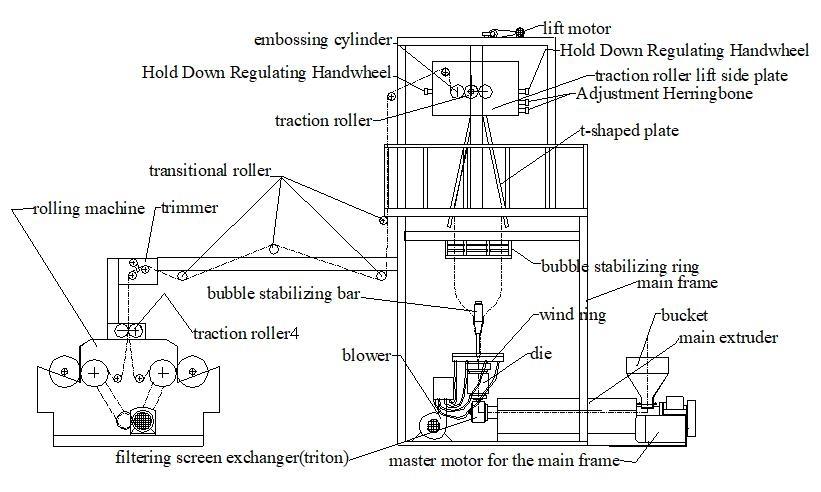
2️⃣ Этапы основного процесса
Шнек и экструзия
-
Шнек осуществляет подачу, сжатие, пластификацию и гомогенизацию расплава.
-
Типичное соотношение L/D: 30:1 или 32:1; Материал шнека влияет на стабильность расплава и эффективность экструзии.
-
Плохая конструкция шнека может привести к перепадам температуры, нестабильности давления и неравномерному качеству пленки.
Формирование штампов и пузырьков
-
Расплав проходит через кольцевую фильеру, образуя трубчатую пленку.
-
Точность штампа напрямую определяет равномерность толщины пленки и распределение расплава.
-
Оптимизация моделирования и сверхнизкая шероховатость поверхности снижают сопротивление расплава и отклонения по толщине.
-
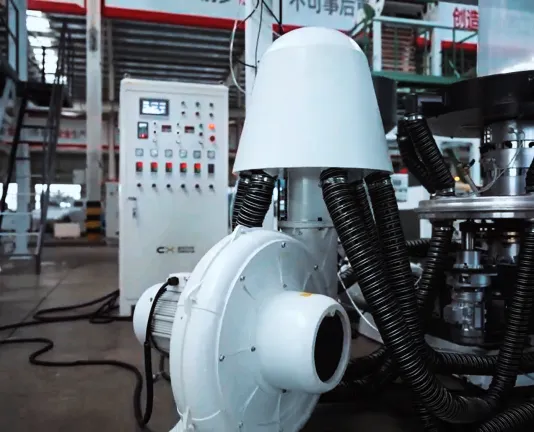
Стабильность пузырьков очень важна: внутреннее давление и охлаждающий воздух совместно контролируют диаметр пузырьков и ориентацию молекул.
Высокотехнологичные машины оснащены автоматическими воздушными кольцами и системами управления с замкнутым циклом, что обеспечивает стабильность производства в течение длительного времени.
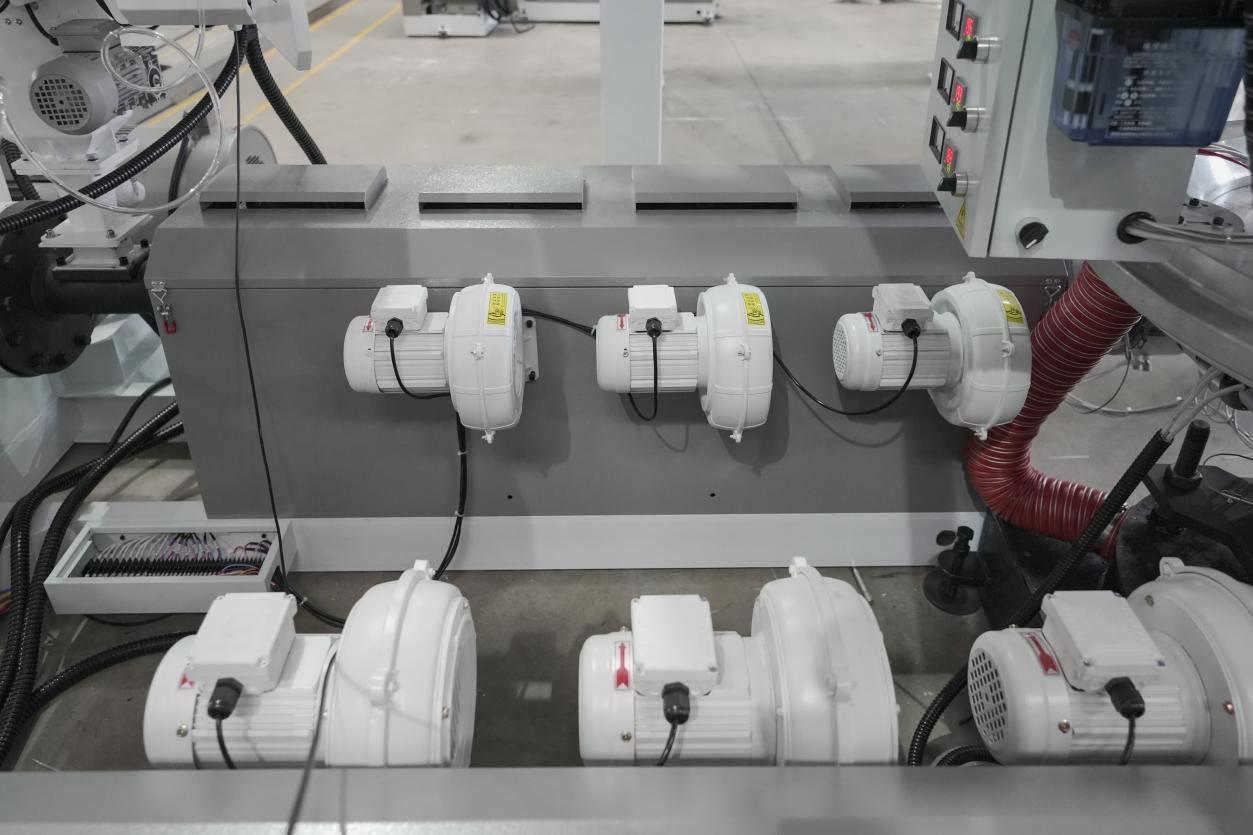
3️⃣ Охлаждение, транспортировка и ориентация
Охлаждение
-
Охлаждение определяет конечную молекулярную структуру пленки.
-
Неравномерное охлаждение может привести к внутреннему напряжению, усадке и снижению прозрачности.
-
Эффективные системы воздушных колец необходимы для многослойная соэкструзия и высокоскоростное производство.
Выгрузка и ориентация
-
Пленка проходит через формующие ролики в систему транспортировки; скорость транспортировки и скорость экструзии вместе регулируют конечную толщину пленки.
-
Поперечная ориентация происходит за счет расширения пузыря, в то время как ориентация машинного направления поступает от растяжек при транспортировке.
-
Сбалансированная ориентация улучшает прочность на разрыв, сопротивление разрыву и термозапечатывающие свойства.
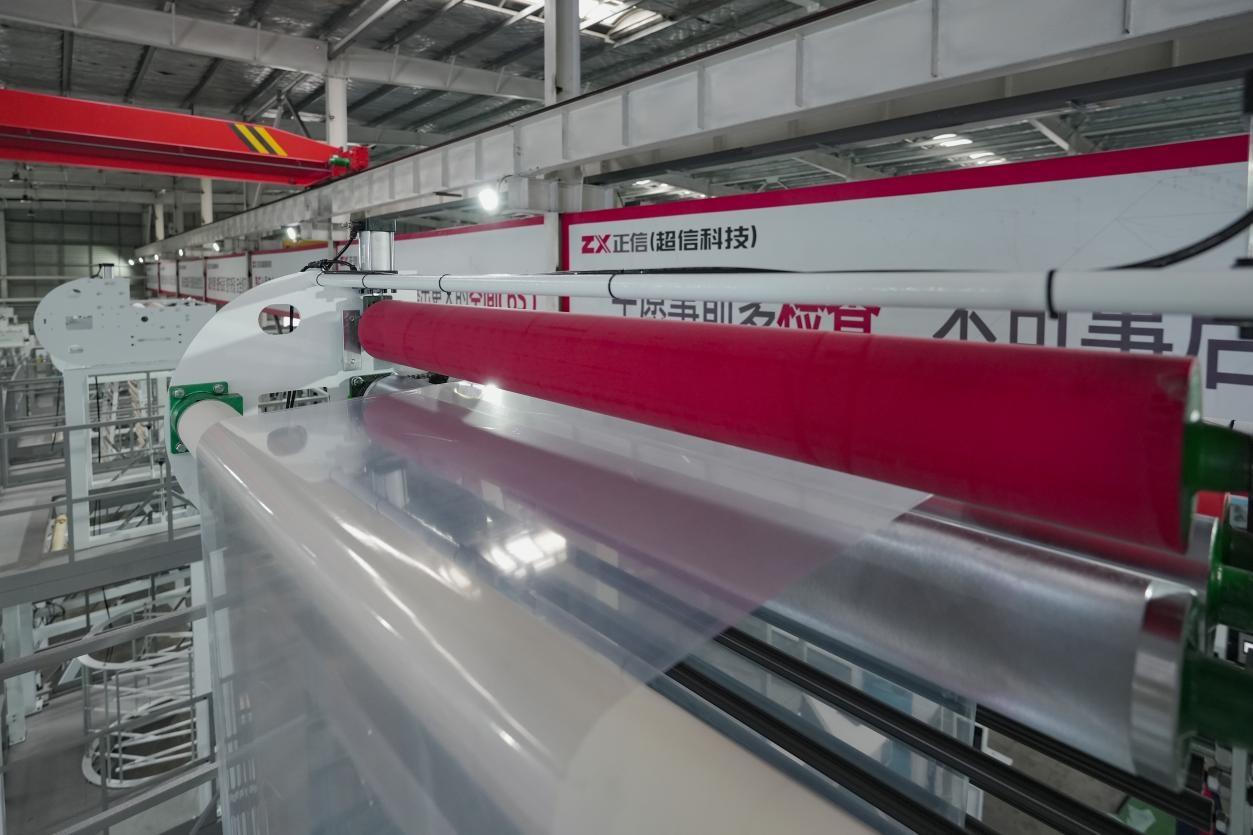
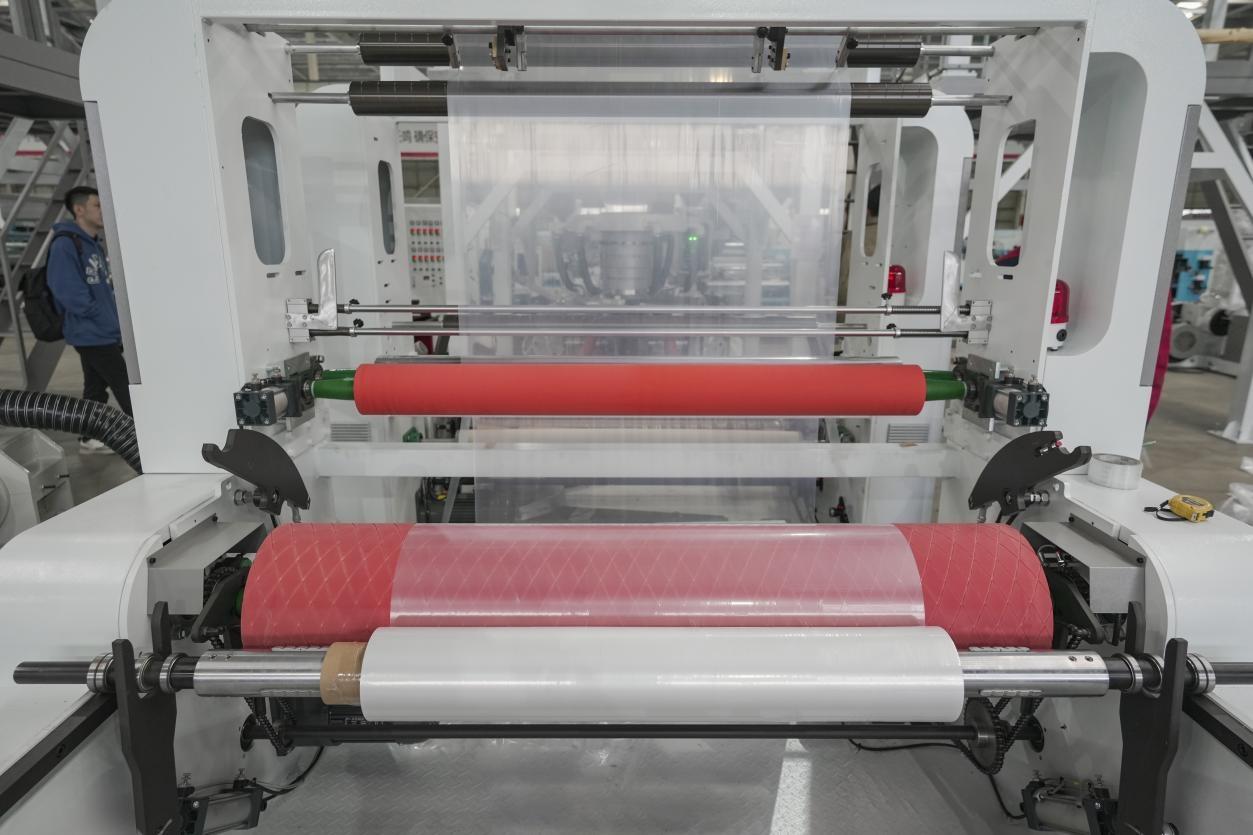
4️⃣ Система намотки
-
Качество намотки влияет на внешний вид рулона и его обработку.
-
Нестабильное натяжение приводит к перекосу, задержке воздуха или деформации вала.
-
Интеллектуальные системы намотки поддерживают постоянное натяжение и равномерная плотность прилегания валов даже на высоких скоростях.
-
Режимы намотки: центральная обмотка, поверхностная обмотка или комбинация
-
Функции автоматической смены валов и направления кромок сокращают время простоя.
5️⃣ Многослойная совместная экструзия и адаптация материалов
-
Многослойная соэкструзия (ABA, ABC или более слоев) повышает производительность при одновременном снижении стоимости.
-
Для средних слоев могут использоваться переработанные материалы, для поверхностных - высококачественные или функциональные полимеры.
-
Адгезия слоев обеспечивается ламинирование в штампе, Даже для биоразлагаемых или компостируемых материалов.
-
Настраиваемые от 3 до 11 слоев для удовлетворения требований рынка и экологических норм.
6️⃣ Точность изготовления и долговременная надежность
-
Штампы, изготовленные из износостойкой кованой легированной стали, обеспечивают долговременную стабильность размеров.
-
Пятиосевая обработка с ЧПУ с точностью ±0,01 мм; цеха с постоянной температурой и влажностью обеспечивают стабильное качество деталей.
-
Высококачественные электрические компоненты и интеллектуальные системы управления повышают безопасность, энергоэффективность и срок службы.
Стабильное производство зависит от долгосрочная надежность, а не кратковременное увеличение пропускной способности.
7️⃣ Важность закупок оборудования
Понимание фундаментальных принципов позволяет контроль рисков для покупателей:
-
Стабильный выход
-
Постоянное качество пленки
-
Снижение эксплуатационных расходов, быстрая окупаемость инвестиций
Ключевые соображения:
-
Оптимизированный винт
-
Прецизионный штамп
-
Стабильная система отвода
-
Интеллектуальная намотка
Одной только цены недостаточно; решающее значение имеют глубина проработки, совместимость материалов и послепродажная поддержка.
8️⃣ Резюме
Овладение основами производства пленочного дутья - ключ к достижению высокое качество, низкая стоимость и устойчивая конкурентоспособность. Научная разработка каждого этапа процесса обеспечивает долгосрочное стабильное производство.