What Is a Single-Layer Blown Film Machine?
A single-layer blown film machine is an industrial system designed to produce plastic film through a single-layer extrusion process.
Its working principle involves heating and melting plastic raw materials such as HDPE, LDPE, or LLDPE, which are then extruded through a circular die head to form a film bubble. The bubble is cooled by air, hauled off, flattened, and finally wound into film rolls.
Compared with multi-layer co-extrusion equipment, single-layer blown film machines offer several clear advantages:
• Simpler machine structure
• Lower initial investment cost
• Easier operation
• High production stability
For these reasons, single-layer blown film machines are widely used in the production of shopping bags, garbage bags, agricultural films, and general packaging films. They remain one of the most practical and mature solutions in the plastic packaging industry.
To understand why this equipment still dominates plastic bag production today, it is necessary to further examine its technical differences, application scenarios, and long-term advantages.
Differences Between Single-Layer and ABA Three-Layer Blown Film Machines
The core differences between single-layer blown film machines and ABA three-layer blown film machines mainly lie in film structure and equipment complexity.
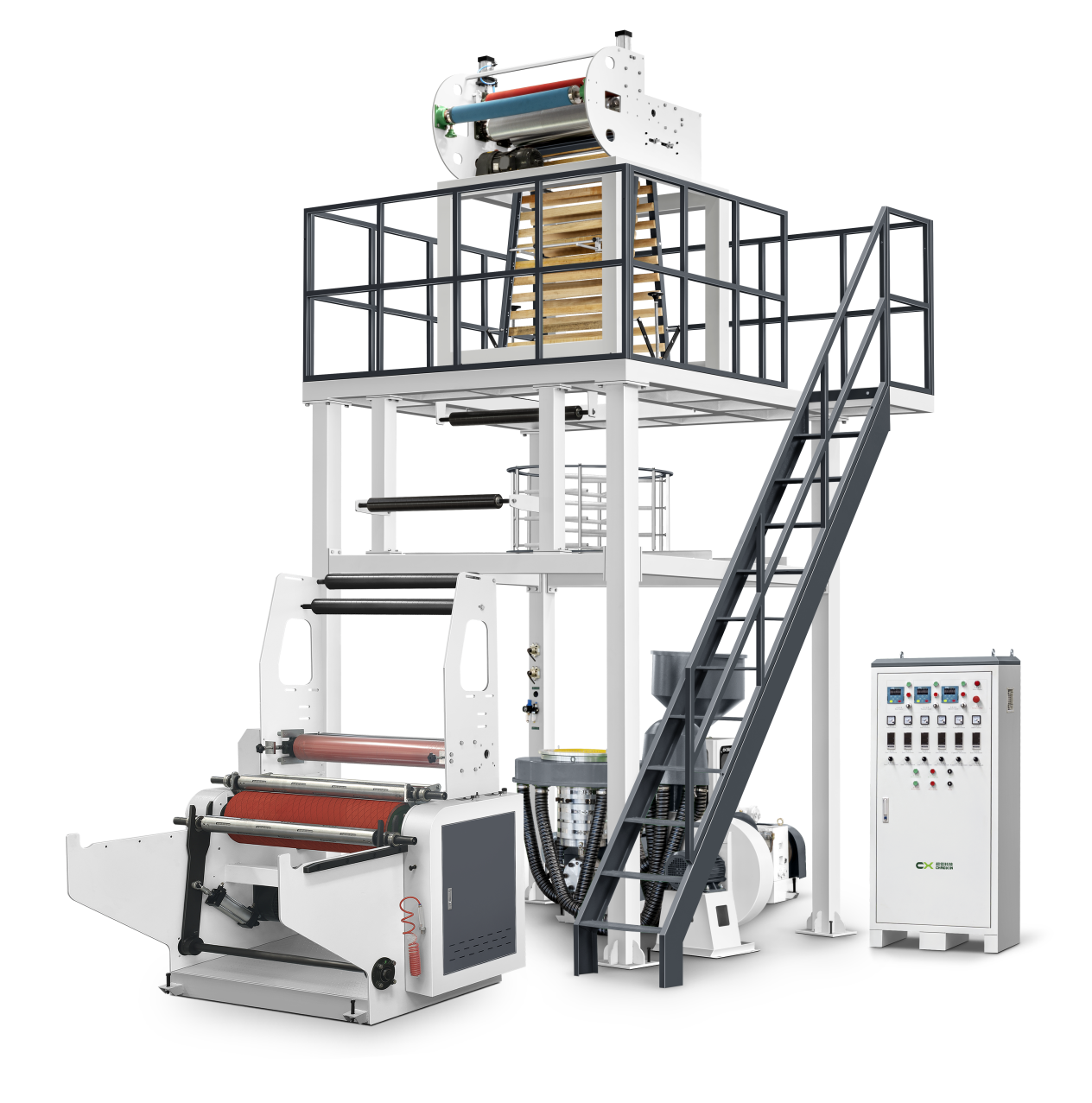
Single-Layer Blown Film Machine
• One extruder
• Single die head
• Uniform material structure
• Simple control system
Resulting advantages include:
• Lower initial investment
• Lower energy consumption
• Easier maintenance
• Faster operator training
ABA Three-Layer Blown Film Machine
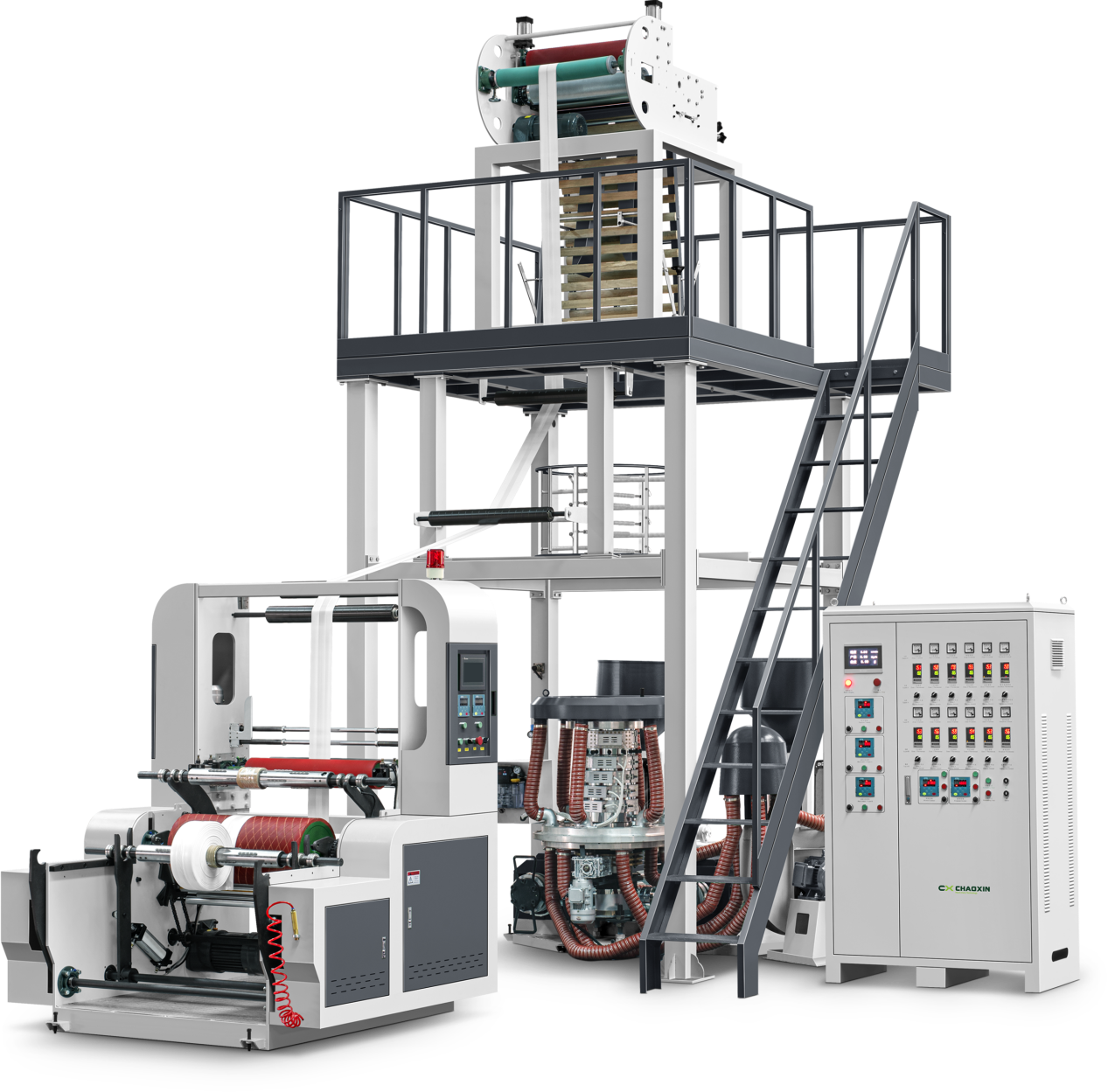
• Multiple extruders
• Complex die head structure
• A/B/A sandwich film structure
• Higher technical requirements
Although the ABA structure allows recycled material to be used in the middle layer to reduce raw material cost, it also introduces:
• Higher equipment cost
• More complex operation
• Increased maintenance and failure risk
With continuous improvements in die flow design and precision machining, modern single-layer blown film machines are now capable of achieving excellent thickness uniformity and mechanical strength. They fully meet the performance requirements of most plastic bag products.
For manufacturers that prioritize production stability and cost control, the single-layer blown film solution remains a more practical choice.
Applications of Single-Layer Blown Film Machines in Bag Production
Thanks to their high stability, strong adaptability, and excellent compatibility with downstream equipment, single-layer blown film machines play a crucial role in the bag-making industry.
Main Product Applications
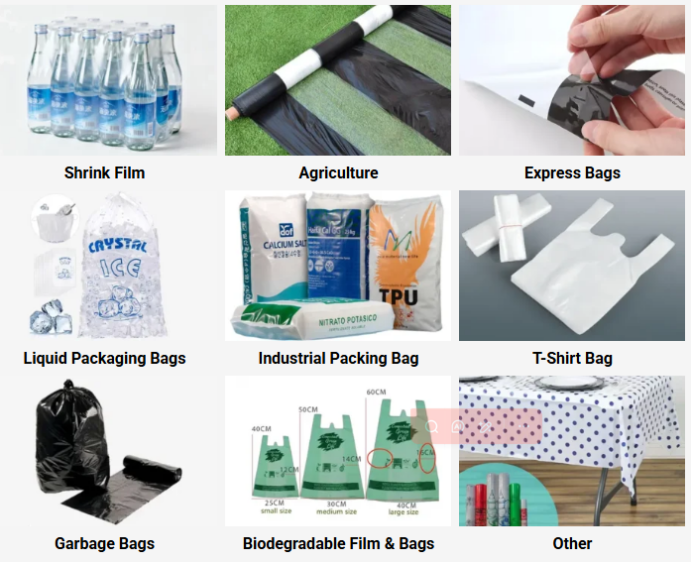
Single-layer blown film machines are widely used to produce films for:
• T-shirt bags
• Flat bags
• Garbage bags
• Agricultural mulch films
• Industrial and commercial packaging liner bags
Why They Are Ideal for Bag Manufacturing
Bag-making processes require films with:
• Stable thickness
• Good heat-sealing performance
• Reliable tensile strength
High-quality single-layer blown film machines provide:
• Stable bubble control
• Precise haul-off systems
• Uniform winding tension
This directly results in:
• Reduced material waste
• Smoother bag-making operations
• More consistent finished bag quality
Strong Material Adaptability
Single-layer blown film machines can process:
• HDPE / LDPE / LLDPE
• Biodegradable materials
• Modified or blended compounds
This allows bag manufacturers to flexibly adjust material formulations without changing equipment, enabling fast responses to market demand and environmental regulations.
Single-Layer Blown Film Machines Remain the Mainstream Choice for Plastic Bag Production
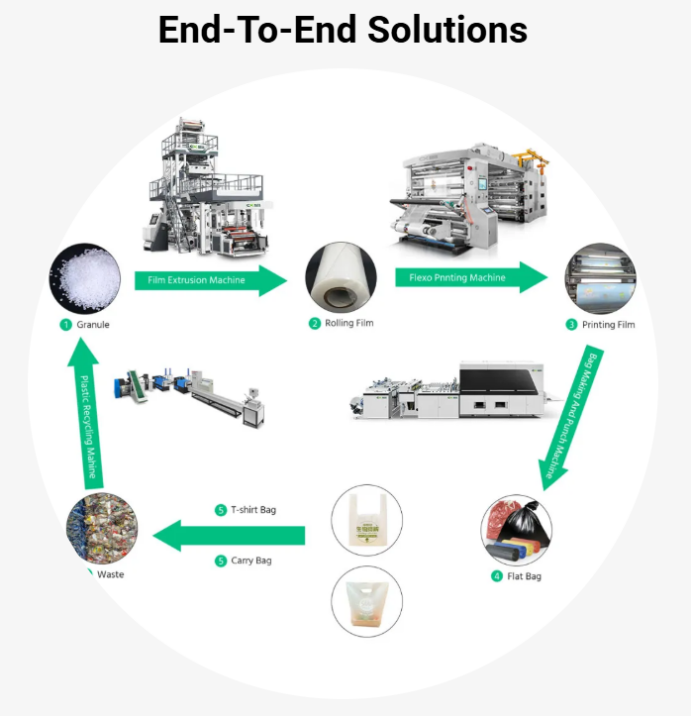
Despite the continuous development of multi-layer co-extrusion technology, single-layer blown film machines still dominate plastic bag production worldwide.
Key Reasons Include:
1. Clear Cost Advantages
• Lower initial investment
• Reduced energy consumption
• Shorter return on investment cycle
2. Stable and Reliable Production
• Fewer components
• Lower failure rate
• Minimal downtime
3. Continuous Technological Upgrades
Modern single-layer blown film machines are now equipped with:
• Optimized screw designs
• High-precision die heads
• Intelligent control systems
As a result, single-layer films deliver excellent performance in terms of:
• High transparency
• Stable thickness control
• Reliable mechanical properties
Environmental and Recycling Advantages
Single-layer films feature:
• Simpler material structure
• Easier recyclability
• Better compliance with evolving environmental regulations
Under the global trend toward circular economy and stricter environmental policies, single-layer blown film solutions are once again gaining strong market preference.
Conclusion
Single-layer blown film machines remain a mature, efficient, and cost-effective solution for plastic film and bag production. With simple structure, stable operation, and strong material adaptability, they continue to deliver long-term value for manufacturers focused on reliability, sustainability, and controlled investment.