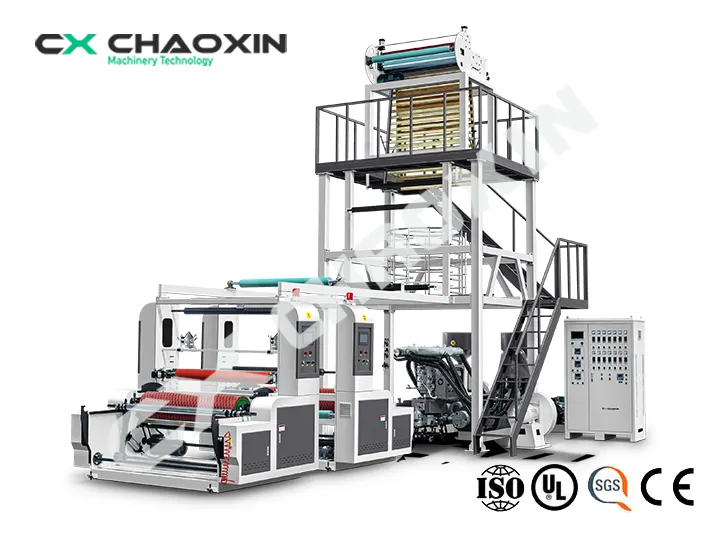
A blown film machine is a highly integrated production system that converts plastic raw materials into continuous tubular film through extrusion, inflation, cooling, and winding processes. All subsystems work together to ensure stable machine operation, uniform film thickness, and reliable finished product quality.
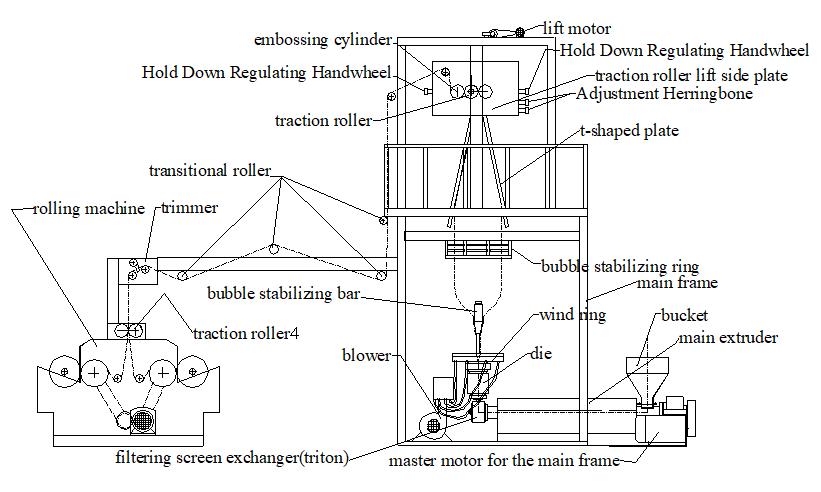
🔧 Extrusion System
The extrusion system is the core part of the blown film machine and mainly consists of the extruder, screw, barrel, and drive motor. A high-performance bimetallic screw (such as a 30:1 or 32:1 L/D ratio) can achieve:
- Full plasticization of raw materials
- Stable extrusion pressure
- Uniform melt mixing
These factors directly determine the film’s strength, transparency, and mechanical performance.

🎯 Die Head System
The die head determines the final film structure and thickness uniformity. Through precision machining and optimized flow channel design, the die head can achieve:
- Uniform melt distribution
- Multi-layer co-extrusion structures (ABA, ABC, multi-layer)
- Compatibility with various material formulations
High roundness accuracy and an ultra-smooth inner surface can significantly reduce thickness deviation and improve film quality.
❄️ Air Ring and Cooling System
The air ring is used to stabilize the bubble and provide fast, uniform cooling. Advanced airflow design helps to:
- Improve bubble stability
- Enhance film transparency
- Maintain dimensional consistency
Under high-speed production conditions, cooling efficiency is especially critical.
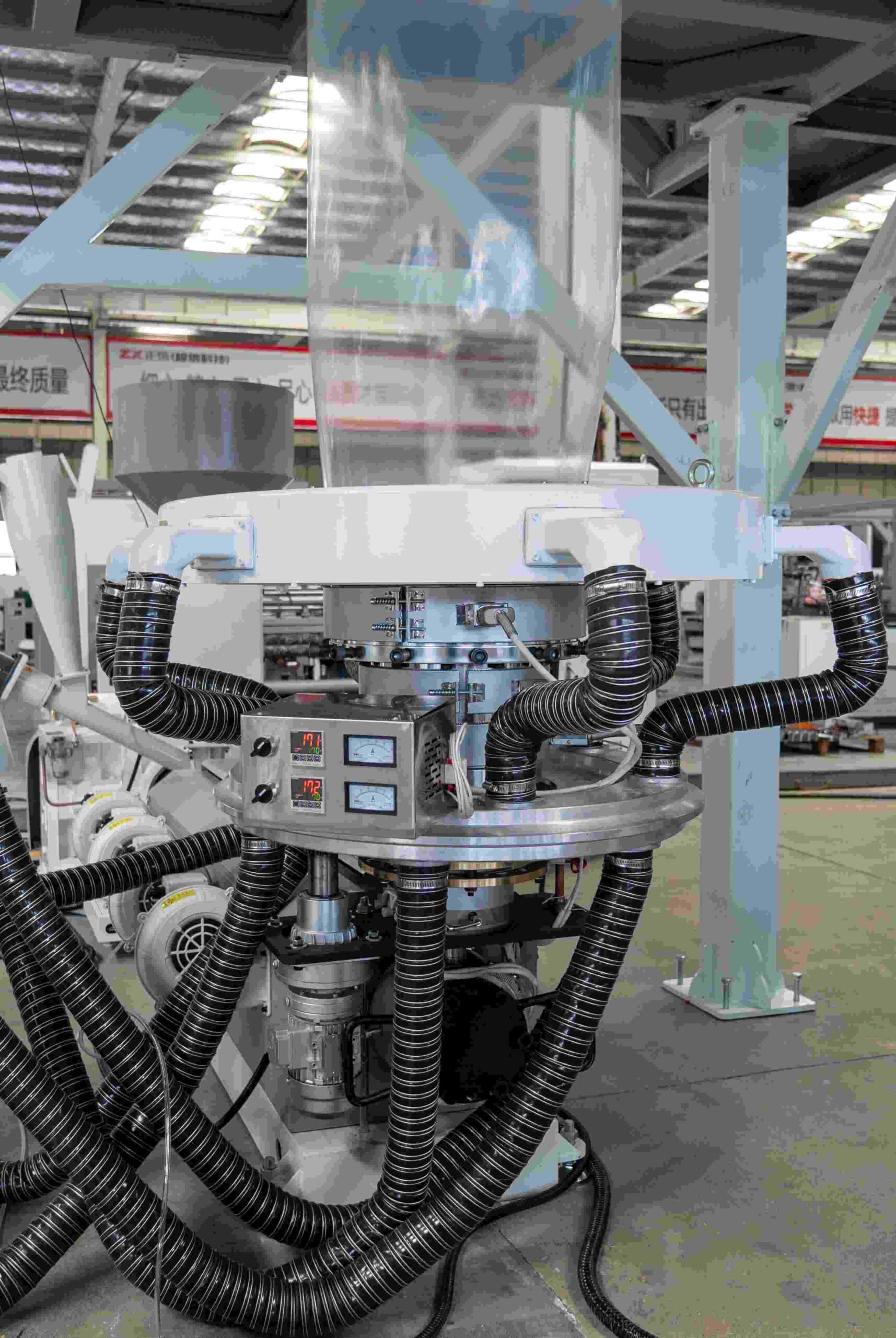
🧲 Haul-Off and Winding System
The haul-off system is responsible for pulling the film upward and controlling tension, while the winding system rolls the film into finished reels. An innovative five-roller haul-off structure and patented winding method can achieve:
- Higher film flatness
- Fewer edge defects
- Better finished roll appearance
A stable winding process can effectively reduce waste and improve downstream processing efficiency.
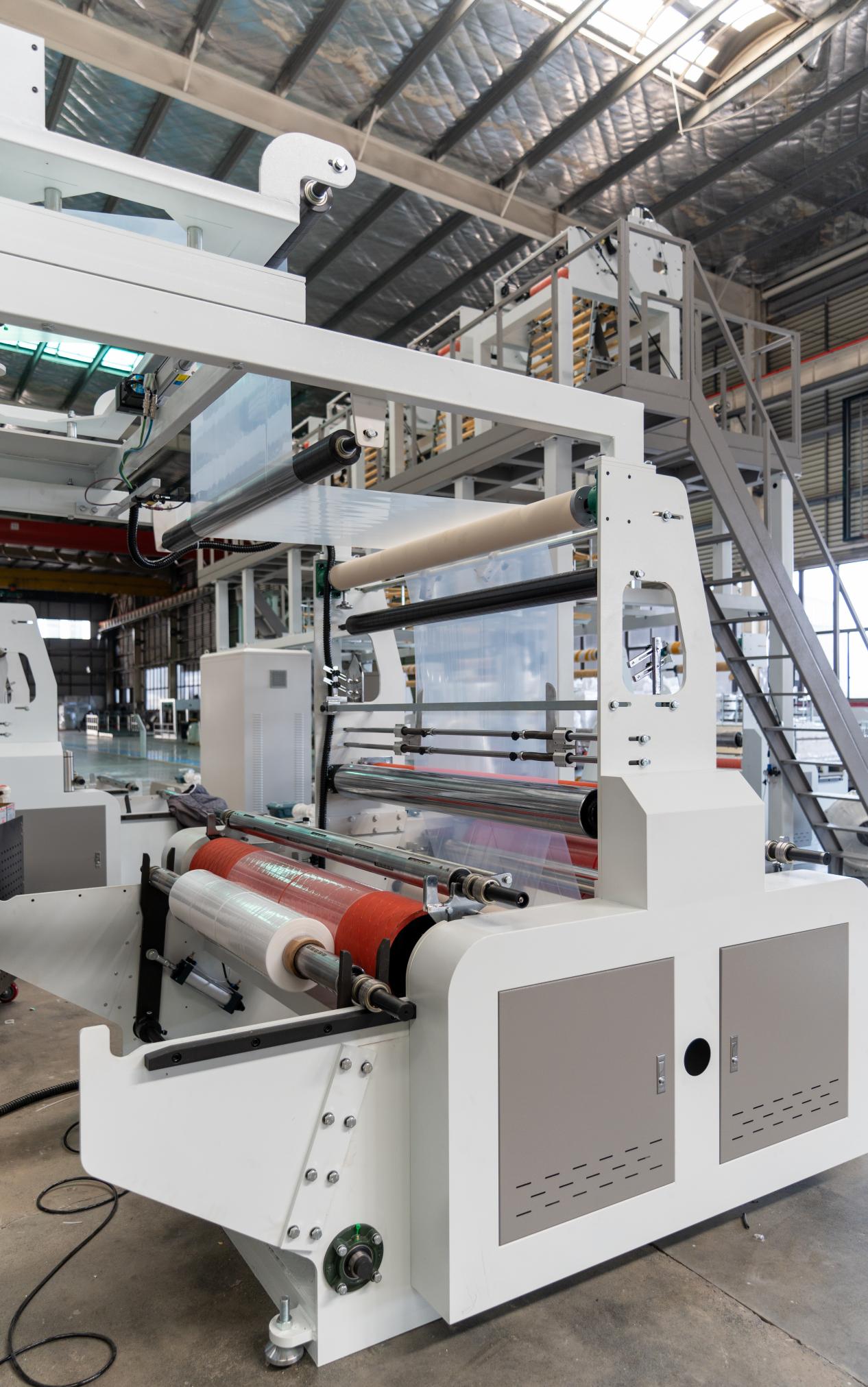
🖥️ Control System
Modern blown film machines use highly integrated control systems to precisely manage temperature, speed, and tension. High-quality electrical components can ensure:
- Accurate parameter control
- Reduced downtime
- Lower energy consumption
Intelligent control systems also help optimize production processes and support sustainable manufacturing goals.
How Long Can a Blown Film Machine Run Continuously?
Continuous running capability is an important indicator of blown film machine performance, especially in large-scale industrial production environments. Under proper operating conditions, a high-quality blown film machine can achieve stable continuous operation 24 hours a day, 7 days a week.
⏱️ Key Factors Affecting Continuous Running Time
The following factors directly determine the machine’s continuous operating capability:
- Structural design and core component quality
Equipment made with high-strength forged alloy steel and precision machining processes can withstand thermal and mechanical stress over long periods. - Temperature control stability
A precise temperature control system can prevent material degradation and ensure stable melt flow during long production runs. - Maintenance management level
Regular inspection, lubrication, and timely replacement of wearing parts can significantly reduce the risk of unexpected downtime. - Operator skill level
Skilled operators can quickly adjust parameters and identify abnormalities in advance.
🔄 Actual Production Performance
In practical applications, many customers’ blown film machines can run continuously for several weeks, stopping only for:
- Scheduled maintenance
- Material changes
- Product specification adjustments
This performance is crucial for large-volume order delivery, cost control, and product quality consistency.
How to Choose the Right Blown Film Machine?
Choosing the right blown film machine is a strategic decision that directly affects production capacity, product diversification capability, and return on investment. A systematic selection approach can effectively reduce investment risk.
📌 Define Production Requirements
First, it is necessary to clarify:
- Film width and thickness range
- Target output
- Product application field
- Film structure requirements
Clear requirement positioning helps quickly identify suitable machine models.
🧪 Raw Material Compatibility
Different blown film machines support different material types, such as:
- LDPE / HDPE / LLDPE
- Biodegradable materials
- Compostable materials
Multi-layer co-extrusion blown film machines can combine materials to achieve:
- Higher film strength
- Better barrier performance
- A better balance between cost and performance
⚙️ Configuration and Customization Capability
Key configurations include:
- Central feeding or side feeding
- Flat winding or tapered winding
- Different die head diameters and layer numbers
Highly customizable designs can meet current production needs while leaving room for future expansion.
🏭 Manufacturing Quality and Operating Stability
High-quality blown film machines usually feature:
- Simulation-optimized die head design
- Precision machining in constant temperature and humidity environments
- Strict implementation of international quality inspection standards
These factors together ensure long-term stable operation and high-precision output.
🤝 After-Sales Service and Technical Support
A complete after-sales system should include:
- Installation and commissioning support
- Operator training
- Spare parts supply guarantee
- Long-term technical service
Extended warranties on core components reflect the manufacturer’s confidence in product reliability.
🌱 Energy Saving and Environmental Performance
Modern blown film machines place greater emphasis on:
- Lower energy consumption
- Reduced raw material waste
- Compliance with environmental regulations
Advanced control systems can help enterprises achieve green and efficient production while reducing operating costs.
Summary
Blown film machines are the core equipment of plastic film manufacturing enterprises. By thoroughly understanding their structural components, continuous operating capability, and selection criteria, companies can achieve stable production, consistent quality, and sustainable competitive advantages in the global market.