In today’s highly competitive packaging industry, a Blown Film Machine is no longer just a piece of equipment. It is a core foundation that directly affects film quality, cost control, and long-term profitability.
As the packaging, agricultural, and industrial film markets continue to demand higher performance, thinner gauges, and more sustainable materials, manufacturers must answer one critical question:
Which blown film machine structure can achieve the best balance among quality, flexibility, and cost efficiency?
This article systematically compares single layer blown film machines and ABA blown film machines, focusing on their advantages, performance differences, and cost impact, to help companies make more rational investment decisions.
👉 Keep reading to discover how the right blown film machine structure can improve film performance, reduce material costs, and enhance production stability.
🔹 What Are the Advantages of an ABA Blown Film Machine?
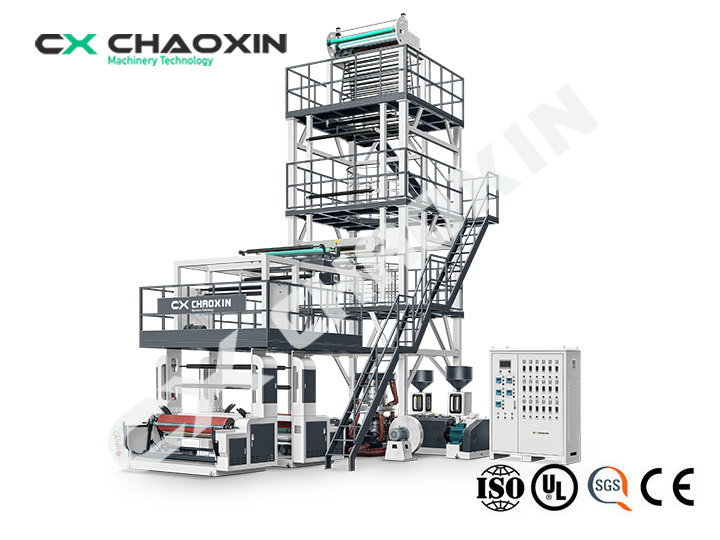
An ABA blown film machine is a three-layer co-extrusion structure, in which two outer layers (A layers) surround the middle functional layer (B layer).
Because it achieves a good balance between performance assurance and material cost optimization, this structure has been widely adopted in the industry.
Its main advantages include:
- Higher material utilization:
The B layer can use recycled materials, filler masterbatch, or lower-cost resin, while the A layers still maintain good surface quality, sealing performance, and appearance. - Better mechanical performance:
ABA structure films usually offer better:- Tensile strength
- Puncture resistance
- Tear balance
- Suitable for a wide range of applications:
Including garbage bags, shopping bags, agricultural mulch film, and industrial packaging. - Stronger production stability:
With advanced die flow channel design and precise temperature control systems, it can achieve:- Uniform melt distribution
- Stable bubble formation
- Consistent film thickness
- Lower reject rates
- Wider material adaptability:
The ABA structure supports flexible combinations of biodegradable and compostable materials. By adjusting formulations in different layers, manufacturers can better meet environmental regulations and sustainability goals.
Overall, the ABA blown film machine is a highly cost-effective solution that balances current production needs and future development.
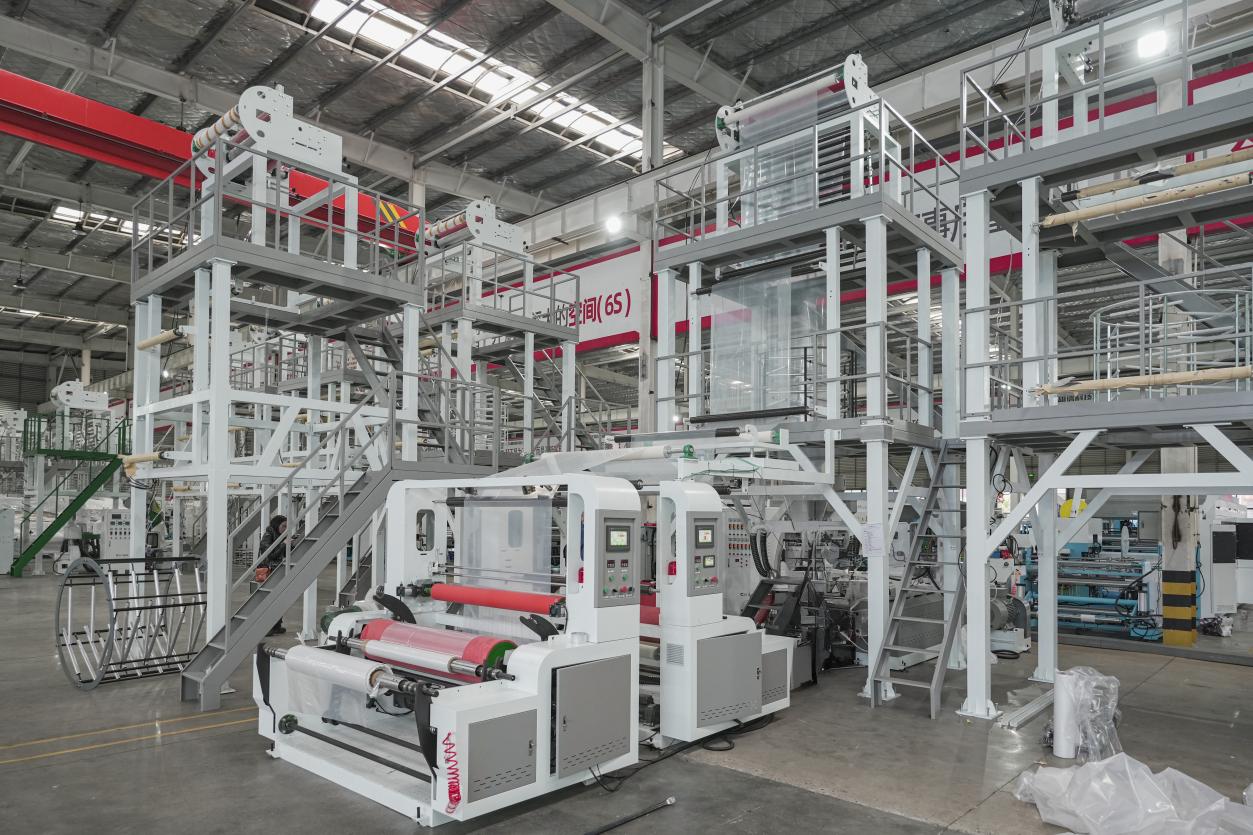
🔹 Single Layer Blown Film Machine VS ABA Blown Film Machine
A single layer blown film machine uses one extruder and a single material structure for production. Its main characteristics include:
- Simple structure
- Easy operation and maintenance
- Lower initial investment cost
Therefore, a single layer blown film machine is suitable for producing basic packaging films with lower performance requirements and relatively stable material formulations. However, as market expectations for film quality continue to rise, its limitations become more obvious.
The main limitations of a single layer blown film machine include:
- Limited material formulation flexibility
Once fillers or recycled materials are added, they will directly affect:
- Surface appearance
- Mechanical strength
- Sealing performance
In contrast, the ABA blown film machine separates functions through its multi-layer structure:
- Outer layers (A layers): appearance, sealing performance, strength
- Middle layer (B layer): cost control and structural support
This structure makes film performance easier to adjust while maintaining stable quality.
From a performance perspective, ABA films usually have:
- Better thickness uniformity
- More reasonable stress distribution
- Higher durability
As a result, ABA blown film machines are widely used in agricultural film, heavy-duty packaging, and functional film production, making them a clear upgrade over traditional single layer blown film machines.
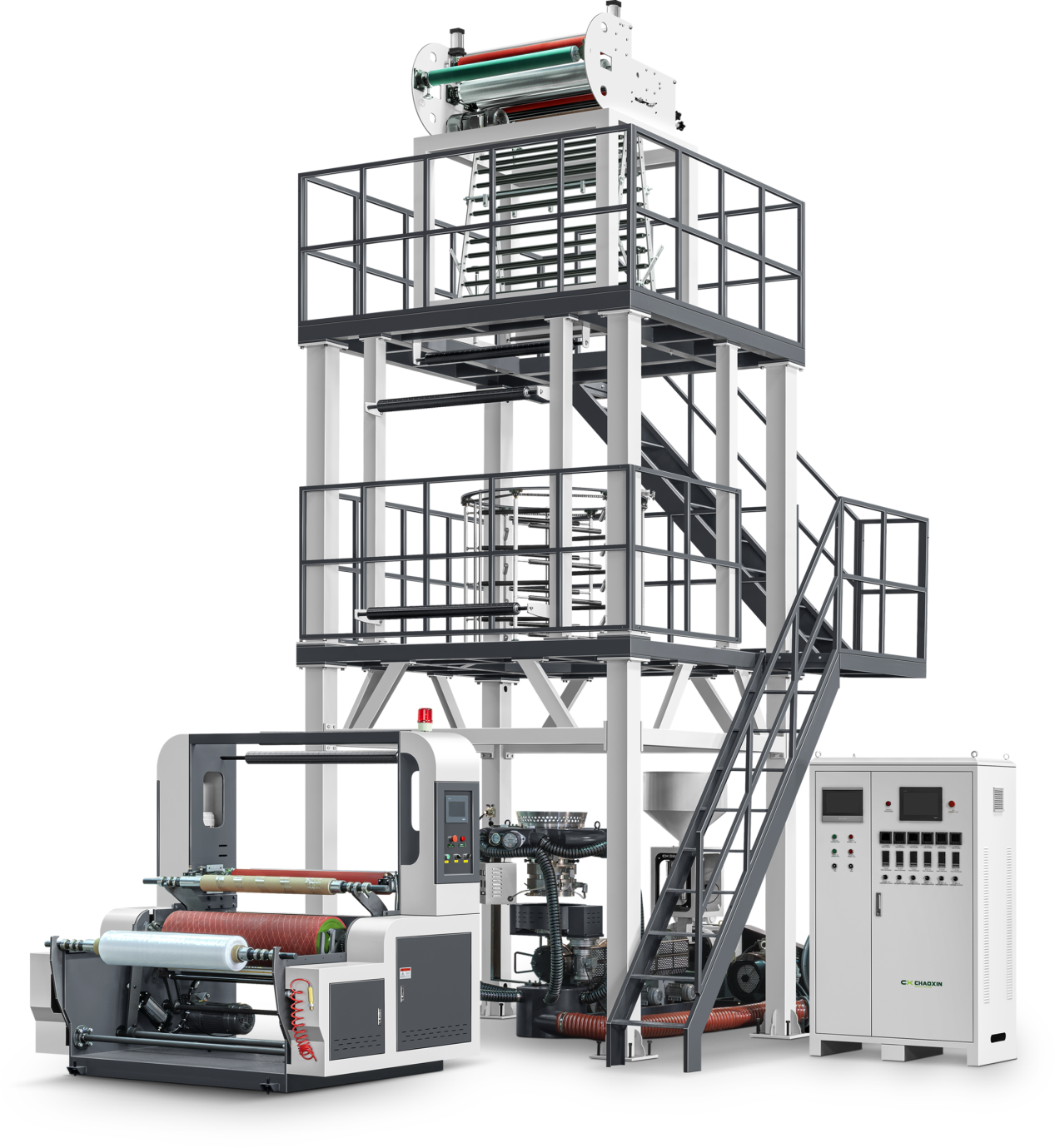
🔹 Cost Comparison Between the Two Machines
When choosing a blown film machine, cost should be evaluated from both initial investment and long-term operation.
Single Layer Blown Film Machine:
- Lower initial investment
- Simpler equipment configuration
- Lower installation and training costs
However, during long-term operation, its cost pressure may gradually become more apparent:
- Higher-grade raw materials are often required to maintain quality
- There is limited room for raw material cost optimization
ABA Blown Film Machine:
Its initial investment is relatively higher, mainly due to:
- Multiple extruder configuration
- High-precision die head system
- More advanced control system
However, the ABA blown film machine offers significant long-term operating advantages:
- The B layer can use lower-cost raw materials, effectively reducing material costs
- More stable thickness control, which reduces scrap rates
- Higher effective output, improving overall production efficiency
For medium-sized and large-scale manufacturers, these advantages often mean a faster return on investment and stronger long-term profitability.

✅ Conclusion
Choosing the right blown film machine depends on your production scale, product positioning, and cost strategy.
A single layer blown film machine can meet basic production needs, while an ABA blown film machine offers stronger advantages in flexibility, quality, and long-term cost control, making it a more strategic choice for sustainable development.