Uneven film thickness leads to material waste, poor seal strength, unstable printing performance, and higher production costs. If this issue is not controlled in time, it can seriously affect product quality and customer satisfaction. The solution lies in coordinated management of melt flow, die precision, cooling, haul-off, and overall process stability.
Film thickness control in blown film extrusion depends on maintaining stable melt pressure, precise die flow distribution, balanced cooling performance, synchronized haul-off speed, and consistent raw material properties. When these factors work together, manufacturers can achieve more uniform film thickness, lower scrap rates, and better downstream bag-making and printing quality.
Why Is Film Thickness Control So Important?
Film thickness control is one of the most critical aspects of blown film extrusion. It directly affects film strength, sealing performance, print quality, and raw material consumption. In actual production, thickness variation not only increases waste, but also creates problems in downstream processes such as bag making, sealing, and printing. Therefore, thickness control is not just a technical adjustment issue, but an important part of improving product consistency, operating efficiency, and overall profitability.

1. Maintain Stable Melt Plasticization
The first step in controlling film thickness is to ensure stable melt plasticization inside the extruder. If the resin is not plasticized evenly, the melt flow entering the die will fluctuate, causing the film to become thicker in some areas and thinner in others.
A high-performance screw design helps achieve more uniform plasticization, more stable pressure output, and better melt homogeneity. This is especially important in high-speed production lines, where even small melt fluctuations can quickly appear on the bubble. Stable feeding, proper screw geometry, and smooth motor performance all support better thickness control.
2. Improve Die Flow Uniformity
The die is one of the most critical components in a blown film line. Its function is to distribute the molten polymer evenly before it is extruded into a film tube. If the die flow channel structure is unbalanced, some areas will discharge more material while others discharge less, causing circumferential thickness deviation.
For this reason, precise die design and machining accuracy are essential. Optimized flow channel structures, smooth internal surfaces, and strict roundness control all help improve melt distribution. Die systems developed through flow simulation analysis can balance the internal flow path more effectively, resulting in more uniform film thickness and better final product quality.
3. Control Temperature Precisely
Temperature stability directly affects film thickness because it changes melt viscosity. If one barrel zone or die zone is hotter than the others, the melt in that area may flow faster, creating localized thickness differences.
To control this issue, manufacturers should maintain a stable and coordinated temperature profile from the feeding section to the die exit. If the temperature is too high, the melt becomes overly fluid; if it is too low, flow resistance and pressure instability increase. The goal is not simply to heat the machine, but to ensure that every heating zone works continuously and in harmony.
4. Keep the Bubble Stable
Once the melt leaves the die, bubble behavior becomes a key factor in thickness control. Even if the extruder and die are working properly, a swinging, breathing, or unstable bubble will disrupt thickness uniformity.
Bubble stability depends on several factors, including:
- Internal air pressure
- Cooling symmetry
- Frost line position
- Tower alignment
- Haul-off stability
When the bubble remains stable, the film thickness around the circumference becomes more uniform. Once the bubble becomes unstable, thickness variation increases and downstream processing becomes more difficult.
5. Balance Air Ring Cooling
The air ring determines whether the bubble is cooled evenly after it leaves the die. Uneven cooling causes one side of the bubble to solidify faster than the other, directly leading to thickness fluctuations.
Balanced and efficient cooling helps maintain bubble symmetry, improve output stability, and keep the target thickness under control. In high-output applications, cooling performance becomes even more important, because higher production rates place greater stress on bubble formation and film stability. Therefore, a well-designed cooling system plays a central role in thickness control.
6. Match Output with Haul-Off Speed
Film thickness largely depends on the relationship between extrusion output and haul-off speed. When output increases without a corresponding adjustment in take-up speed, the film usually becomes thicker. When haul-off speed is too high, the film becomes thinner.
This means operators must always keep output and haul-off speed properly synchronized. A stable haul-off system is especially important because it reduces stretching fluctuations and helps maintain consistent film thickness, particularly in thin-film or high-speed production applications.
7. Use Consistent Raw Materials
Raw material variation is also a common cause of thickness instability. Changes in resin grade, melt index, additive ratio, or moisture content can all alter how the material behaves during extrusion.
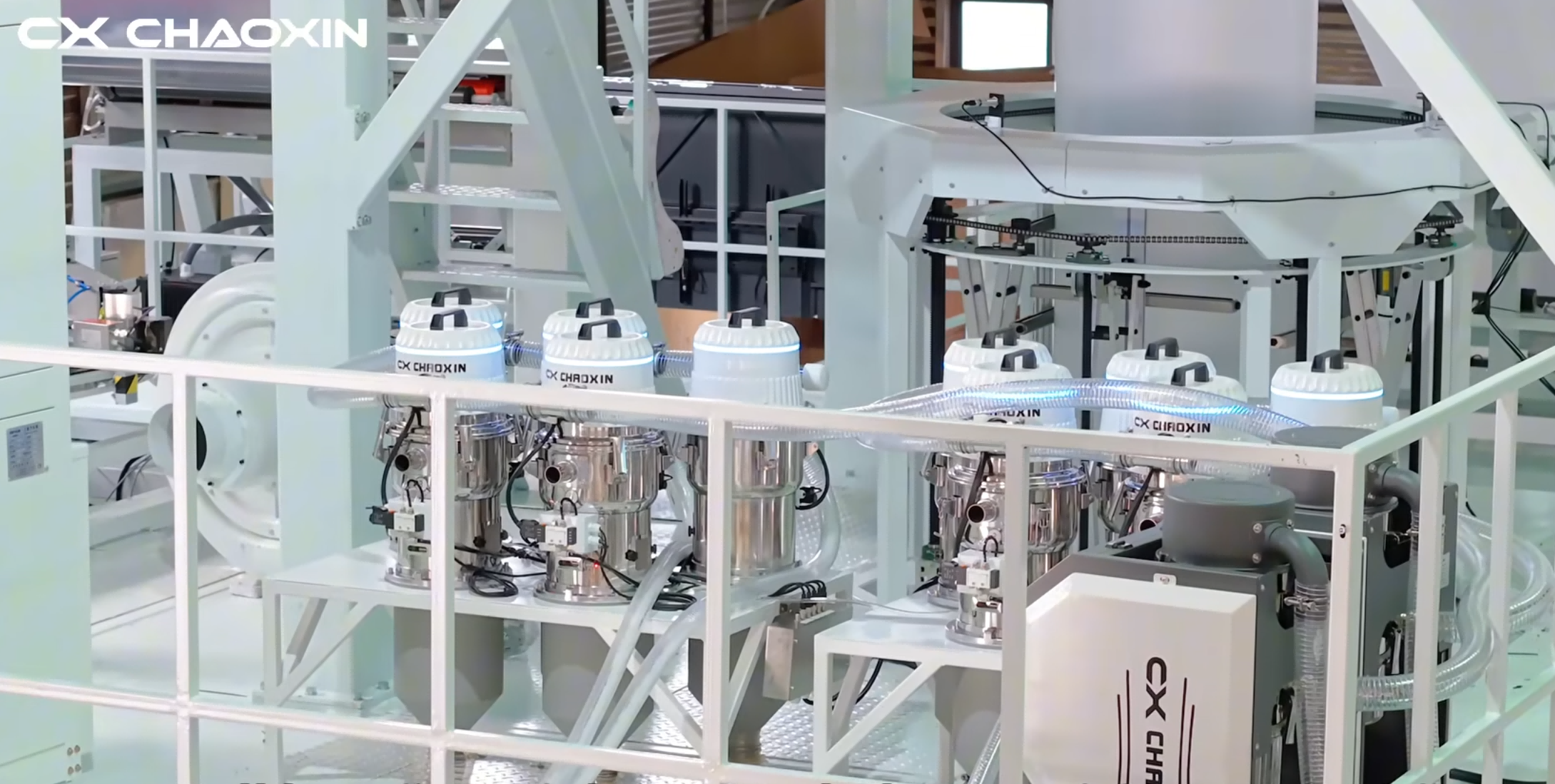
To reduce this risk, manufacturers should use stable formulations and controlled dosing systems. In multilayer film production, layer ratio control is equally important. If one extruder feeds too much or too little material, the total film thickness may shift, affecting thickness uniformity and product performance.
8. Maintain Mechanical Precision
Long-term thickness control also depends on the mechanical precision of the equipment itself. Worn screws, damaged die parts, unstable rollers, or inaccurate haul-off systems will gradually worsen thickness variation over time.
Equipment made with high-quality forged alloy steel, precision machining, and reliable electrical components generally offers better durability and repeatability. This kind of mechanical stability helps manufacturers maintain consistent thickness control during long production runs and under heavy operating conditions.
9. Monitor the Process Systematically
Good thickness control is not achieved through random adjustments. It requires continuous monitoring of the entire process, including:
- Melt pressure
- Melt temperature
- Bubble diameter
- Frost line height
- Line speed
- Winding condition
By tracking these factors together, operators can identify the real cause of thickness fluctuations more accurately and make adjustments more efficiently. A systematic control approach reduces waste, shortens setup time, and improves production reliability.

Conclusion
Stable film thickness comes from integrated control of melt quality, die precision, cooling balance, haul-off coordination, and process monitoring. When these factors are managed together, blown film production becomes more efficient, more stable, and capable of delivering more consistent product quality.